Somnath Tourism Guide
Follow the Arabian Sea to one of India’s most revered Shiva shrines.
About Somnath
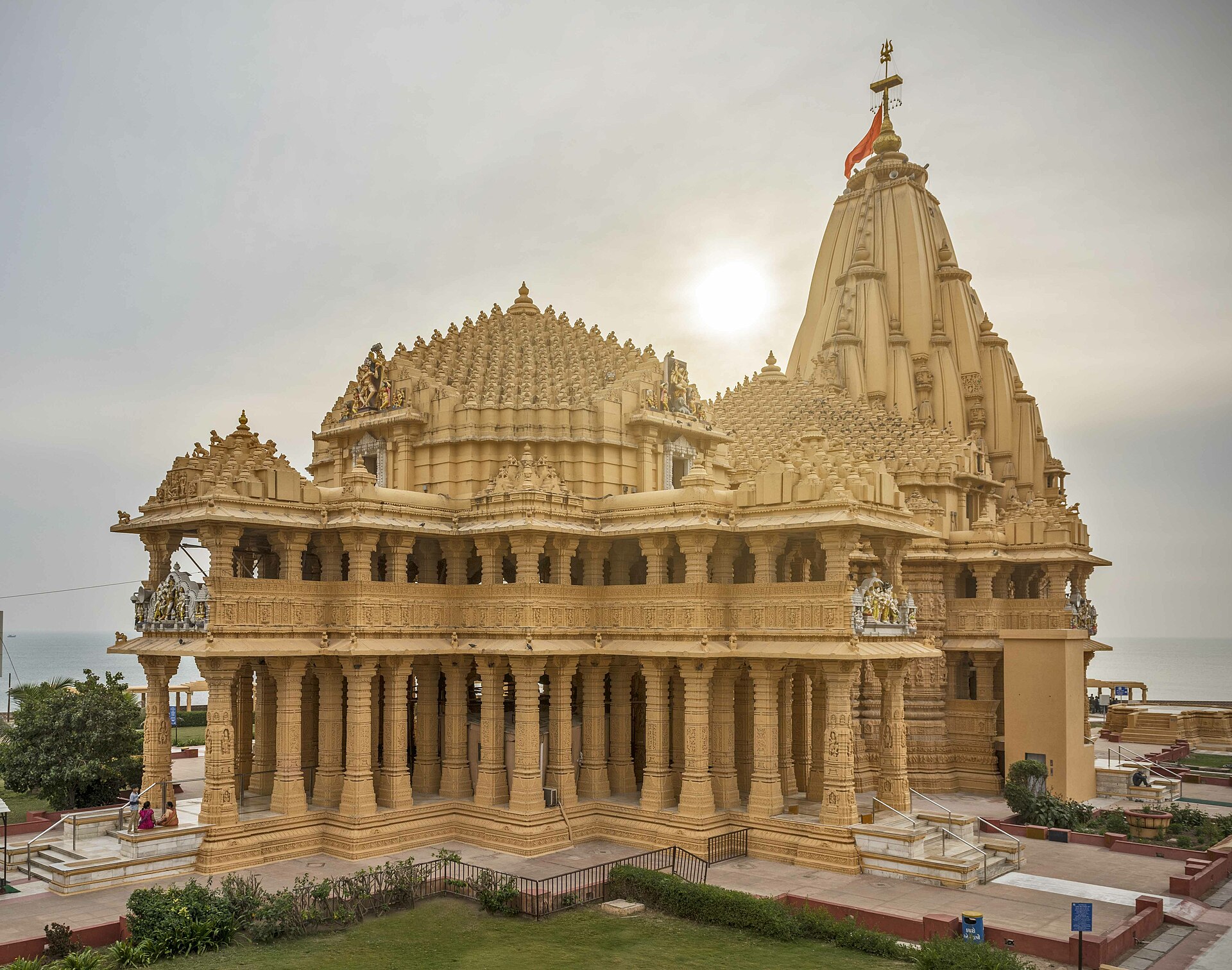
Somnath is both a living pilgrimage and a memorable coastal stop on a Saurashtra journey. The great temple rises beside the Arabian Sea at Prabhas Patan, where the open horizon, ringing bells and evening light create an atmosphere unlike an inland shrine. Pilgrims come for darshan at the first of the twelve traditionally revered Jyotirlingas, while other travellers discover a compact destination rich in sacred geography, maritime views and stories spanning many centuries. A well-paced visit includes the main temple, the confluence at Triveni Sangam, Bhalka Tirth and the quieter shrines around old Prabhas Patan rather than treating Somnath as a single-photo halt.
Somnath works especially well in a Dwarka–Porbandar–Somnath circuit. The road from Dwarka follows western Gujarat through coastal towns and gives private-taxi travellers the freedom to pause at Porbandar, Madhavpur or viewpoints along the way. Dress modestly, allow time for security procedures at the temple and keep phones or restricted items in the designated facility before entering. Sunrise is calm, but the illuminated temple and sound-and-light presentation make evening equally rewarding. Two days let you add Dehotsarg Tirth, the museum and a short coastal excursion without rushing elderly family members. Deepali Taxi Service can arrange a clean vehicle from Dwarka, plan sensible meal and comfort stops, and coordinate a return ride or onward journey to Gir, Junagadh or Diu. Keep the first evening flexible because darshan queues lengthen on Mondays, public holidays and festival dates. Families often benefit from checking into a hotel before visiting the temple, carrying only essentials and meeting the driver at an agreed landmark after worship. Travellers interested in history should pair the museum with the old temple precinct, while photographers will find softer light along the promenade before sunset. The coast is exposed, so a light layer helps in winter evenings and a hat is valuable through most of the year. This practical pacing leaves room for devotion, interpretation and rest instead of reducing the visit to hurried transfers.
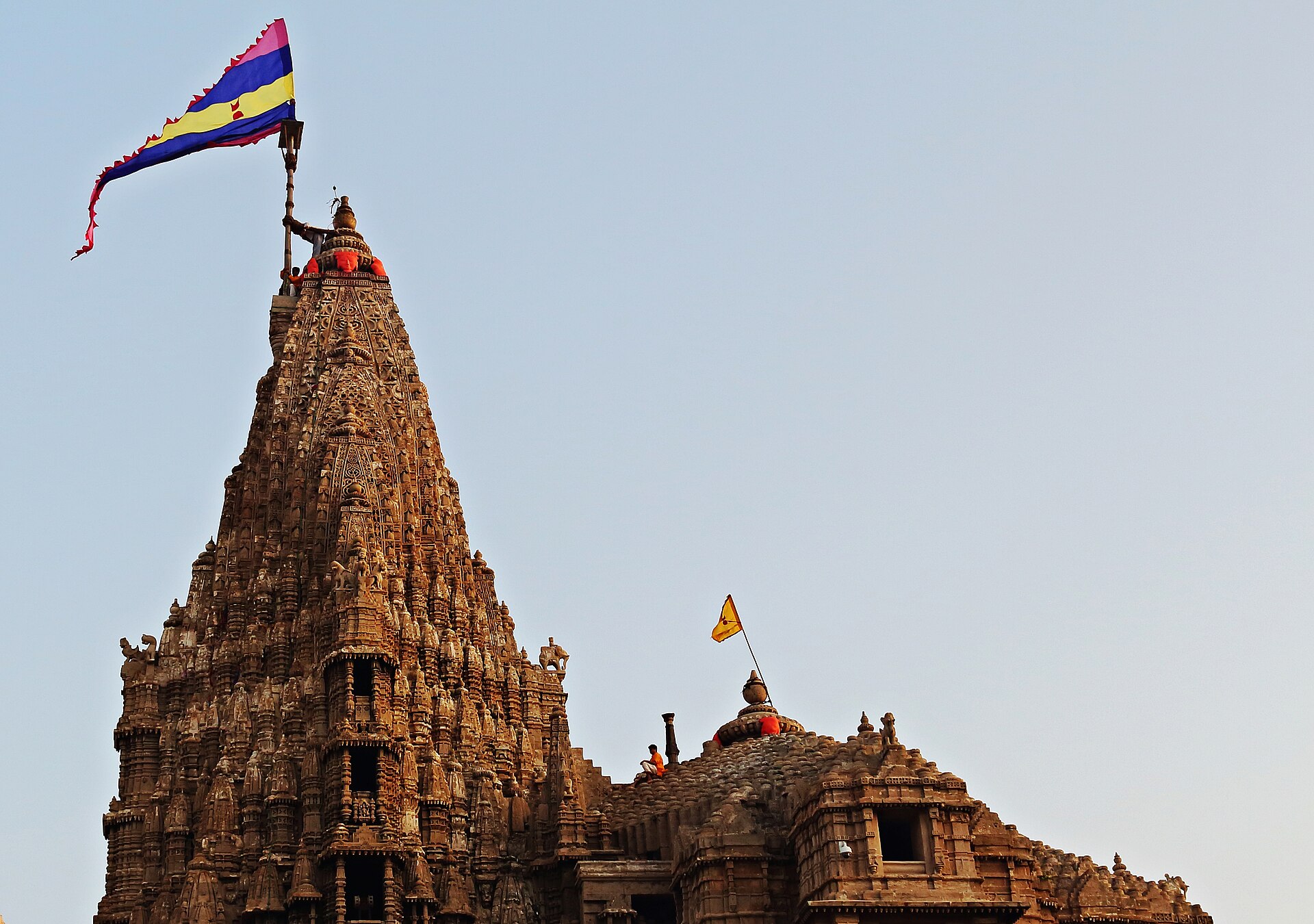
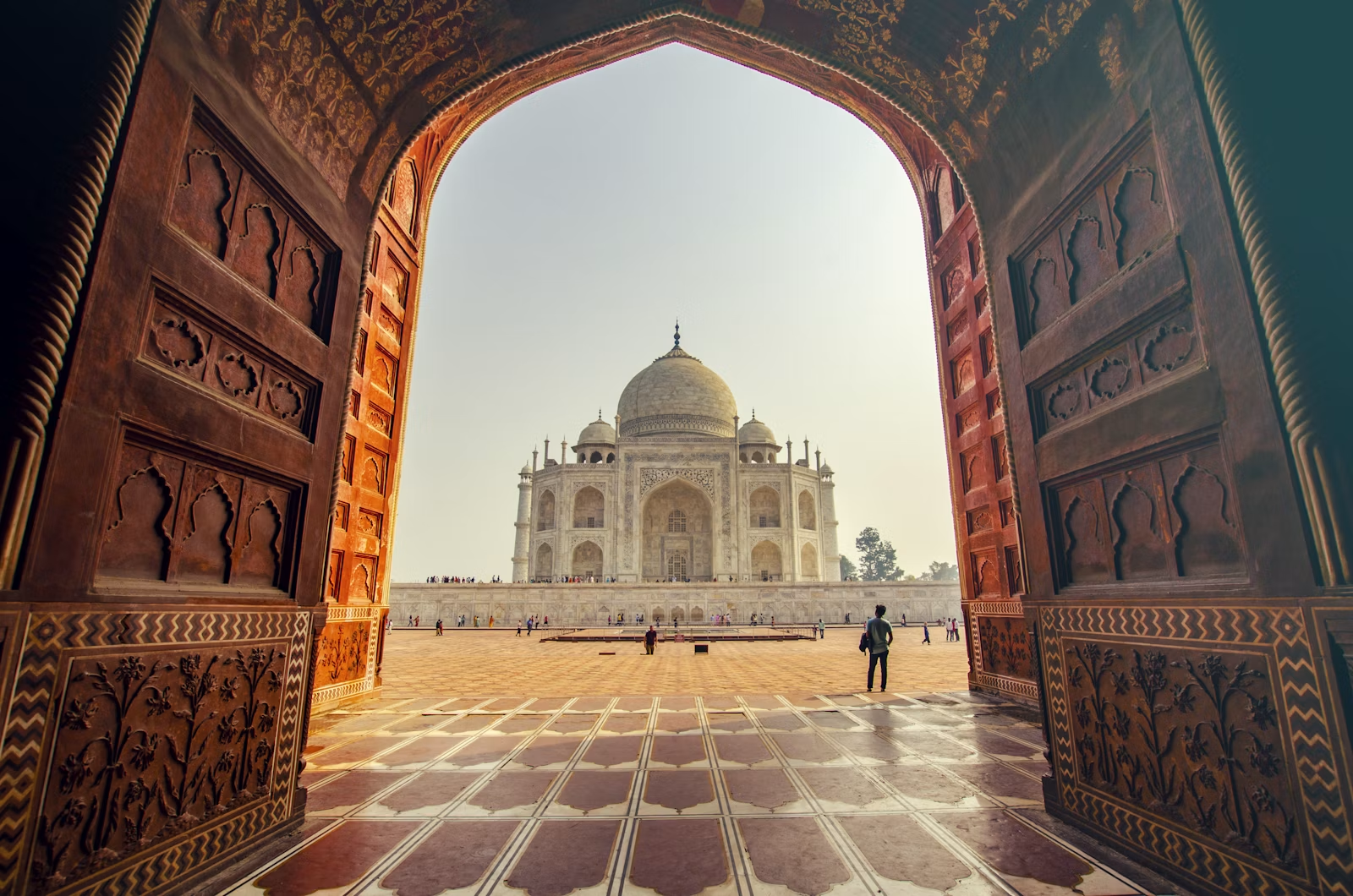
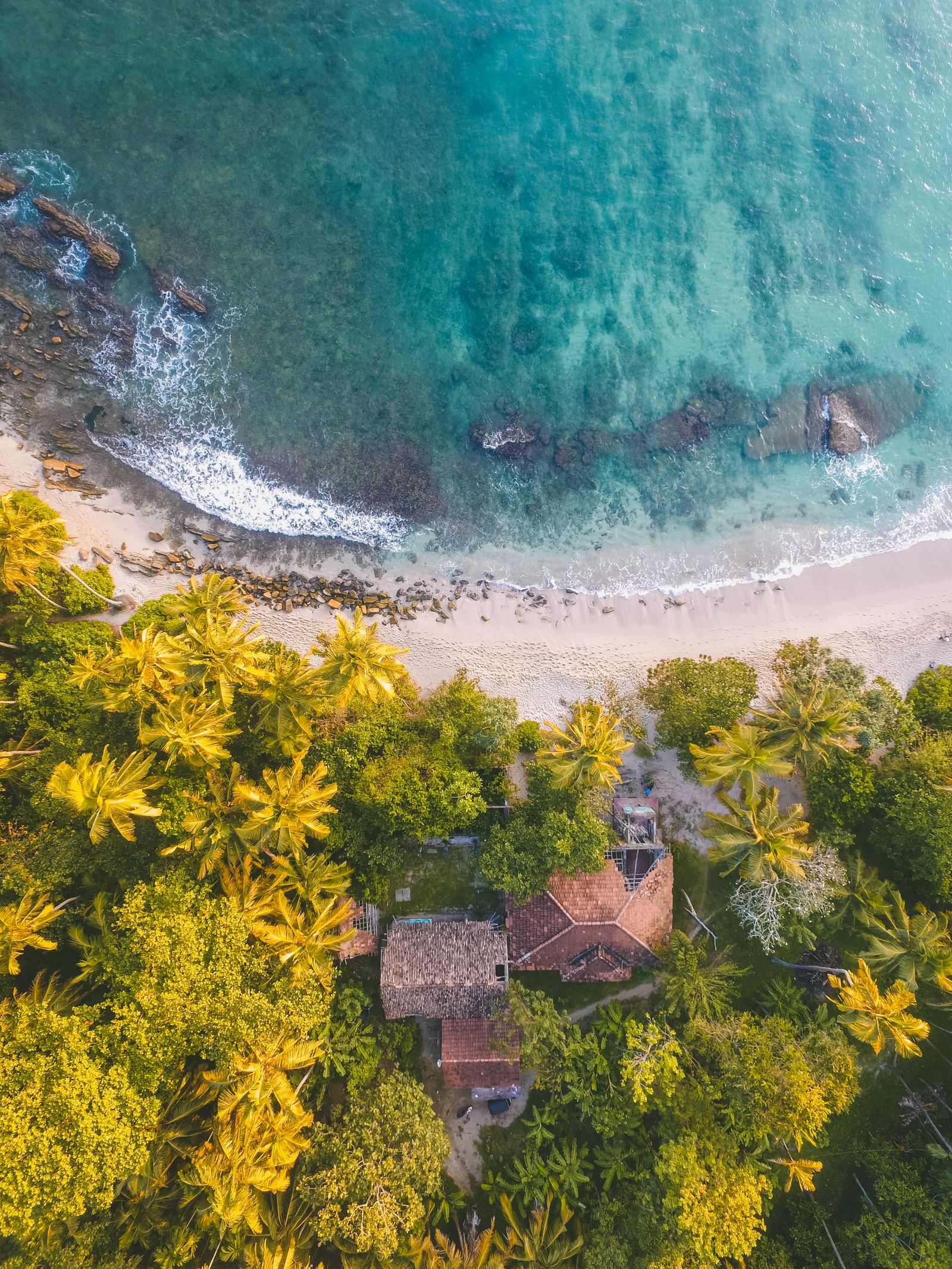
Somnath photo gallery

History & significance of Somnath
Prabhas Patan has been a sacred landscape since antiquity, associated in tradition with the moon god Soma and with Krishna’s final earthly journey. Literary references and archaeological evidence indicate that the coast was connected to old trade routes as well as pilgrimage networks. The Somnath shrine became renowned for its wealth and ritual importance, and historical accounts describe repeated damage, rebuilding and changes of patronage under different powers. Those episodes are often simplified into a single tale, but the site’s deeper significance lies in the continuity of worship and the determination of successive communities to renew it.
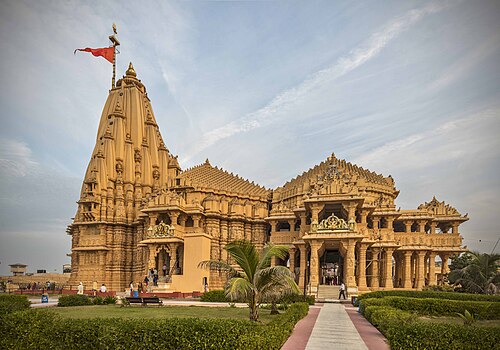
The present temple was built in the Maru-Gurjara tradition after Indian independence. Sardar Vallabhbhai Patel strongly supported its reconstruction, K. M. Munshi helped carry the project forward, and the installation ceremonies took place in 1951 in the presence of President Rajendra Prasad. Its sea-facing position recalls an old maritime world, while the nearby Prabhas Patan Museum preserves sculptural fragments from earlier temple phases. Somnath therefore rewards more than devotional attention: it offers a window into Saurashtra’s architecture, political history, trade and resilient cultural memory. Visiting the museum and satellite tirthas helps place the impressive modern structure within that much longer story. Surviving fragments show changing styles and skilled regional workshops rather than one unaltered building. The celebrated arrow pillar facing the sea also expresses the modern temple’s symbolism and geographic imagination. Reading inscriptions and museum labels carefully helps separate documented chronology from devotional tradition while respecting the importance of both.
Book a taxi or tour to Somnath
Deepali Taxi Service in Varvala, Devbhumi Dwarka offers private cabs, Innova & Tempo Traveller hire, and customised tour packages for Somnath and nearby destinations.
Major tourist attractions in Somnath
Somnath Jyotirlinga Temple
The sea-facing temple is the spiritual and visual centre of the town. Attend an aarti if possible, then walk the promenade to appreciate the carved stonework and uninterrupted Arabian Sea horizon.
Triveni Sangam
This sacred confluence is traditionally linked with the Hiran, Kapila and Saraswati rivers. Early morning is peaceful, and nearby ghats reveal the ritual landscape beyond the main temple.
Bhalka Tirth
Tradition identifies this as the place where Krishna was struck by a hunter’s arrow. The shrine and interpretive displays make it an important stop on the Krishna circuit connecting Somnath and Dwarka.
Dehotsarg Tirth
Located near the Hiran river, this serene complex commemorates Krishna’s departure from the mortal world. Its quieter setting is suited to reflection after the busier temple precinct.
Prabhas Patan Museum
The museum houses stone fragments, inscriptions and archaeological material related to earlier Somnath structures. It adds essential historical context and usually takes about an hour.
Ahilyabai Temple
Built under Queen Ahilyabai Holkar, this modest shrine preserved Jyotirlinga worship before the current temple arose. Its intimate underground sanctum offers a marked contrast to the grand complex nearby.
Local sightseeing in & around Somnath
Popular local sightseeing stops that pairs well with a private taxi circuit from Dwarka and Porbandar. Deepali Taxi Service can sequence these visits with temple timings, meal breaks and hotel pickups.
Somnath Temple & Seafront Promenade
Core local sightseeing: morning or evening darshan plus a walk along the illuminated coast.
Triveni Sangam & Ghats
Sacred confluence visit best paired with temple darshan in the cooler hours.
Bhalka Tirth
Essential Krishna-circuit stop for pilgrims travelling between Dwarka and Somnath.
Dehotsarg Tirth
Quieter sacred landscape for a reflective half-hour stop.
Prabhas Patan Museum
Sculptural history that contextualises the modern temple.
Veraval Harbour & Coast
Working fishing harbour atmosphere; combine with railway transfers.
Explore Veraval Harbour & CoastChorwad Beach Day Trip
Coastal leisure extension after pilgrimage mornings.
Explore Chorwad Beach Day TripBest places to visit in Somnath
- Temple Seafront PromenadeVisit near sunset for sea breeze, broad views and the temple glowing after dusk.
- Old Prabhas PatanThe lanes and smaller shrines reveal Somnath as an inhabited pilgrimage town, not merely a monument.
- Somnath BeachIt is pleasant for a coastal walk and photographs, though strong currents generally make swimming unsafe.
- Prabhas Patan MuseumSculptural remains explain the artistic history that the modern temple alone cannot show.
- Bhalka–Dehotsarg CircuitTogether these sites complete the local Krishna narrative and suit a half-day taxi outing.
Best time to visit Somnath
October to March offers comfortable days for temple visits and coastal sightseeing. Kartik Purnima and Maha Shivaratri are spiritually vibrant but bring heavy crowds, so reserve transport and rooms early.
| Season | Weather | Travel note |
|---|---|---|
| Winter (Oct–Mar) | Pleasant, breezy days around 16–29°C | Best for walking, pilgrimage circuits and evening programs. |
| Summer (Apr–Jun) | Hot and humid, often 27–38°C | Schedule darshan early and rest through the afternoon. |
| Monsoon (Jul–Sep) | Humid with rain and dramatic seas | Allow road-time buffers and avoid rough-water areas. |
How to reach Somnath
By air
Diu Airport, roughly 80–90 km away, is the closest practical airport, while Rajkot and Ahmedabad provide broader flight choices. A pre-booked taxi is the simplest transfer when carrying luggage or travelling with family.
By rail
Veraval Junction is about 7 km from the temple and receives trains from major Gujarat cities and selected interstate origins. Taxis and auto-rickshaws connect the station with Somnath hotels and the temple precinct.
By road
Somnath is connected by all-weather highways to Dwarka, Porbandar, Junagadh, Gir and Rajkot. The Dwarka drive is about 230–240 km and commonly takes five hours before sightseeing stops.
Private taxi with Deepali Taxi Service
Deepali Taxi Service offers advance pickup from Dwarka hotels, the railway station or Dwarkadhish Temple area. Book a one-way ride, same-day return or multi-day Saurashtra cab with planned stops and transparent trip details.
Nearby attractions & destinations
Local food & cultural highlights
Local food in Somnath
Somnath’s dining is largely vegetarian and geared to pilgrims. Look for a fresh Gujarati thali with rotli, dal or kadhi, seasonal shaak, rice, pickle and chaas; simple kathiyawadi meals add bajra rotla, ringan no olo and garlic chutney. Farsan such as khaman, ganthiya and fafda works well for a road snack, while local stalls serve tea and tender coconut near the coast. Choose busy, clean restaurants, confirm spice levels for children, and avoid carrying food into restricted temple areas.
Culture & traditions
Daily life in Somnath is shaped by temple rituals, Sanskrit chants, Gujarati bhajans and the movement of pilgrims through Prabhas Patan. Maha Shivaratri, Shravan observances and Kartik fairs animate the town with processions and devotional music. The wider region also shares Saurashtra’s folk traditions, colourful dress and generous hospitality. Visitors should cover shoulders and knees at sacred sites, remove footwear where directed, ask before photographing worshippers and keep the seafront clean; these small courtesies support the contemplative character residents maintain.
Suggested Somnath itineraries
1-Day Somnath Highlights
- Morning Somnath darshan
- Ahilyabai Temple
- Triveni Sangam
- Bhalka Tirth
- Sunset promenade and evening aarti
2-Day Somnath Sacred Coast
- Day 1 highlights
- Dehotsarg Tirth
- Prabhas Patan Museum
- Old Prabhas shrines
- Somnath Beach walk
3-Day Somnath and Gir Extension
- Somnath circuit
- Morning Gir safari
- Junagadh or Diu onward excursion
Travel tips for Somnath
- Check current darshan, aarti and sound-and-light timings before arrival.
- Phones, cameras and some bags are restricted inside the main temple; use official storage.
- Wear modest clothes and easy-to-remove footwear for multiple shrines.
- Do not swim where coastal warning signs indicate strong currents.
- Carry water and sun protection even during winter afternoons.
- Pre-book a Gir permit separately if adding a wildlife safari.
- Confirm taxi inclusions, waiting time and overnight driver allowance before departure.
Book a taxi or tour to Somnath
Deepali Taxi Service in Varvala, Devbhumi Dwarka offers private cabs, Innova & Tempo Traveller hire, and customised tour packages for Somnath and nearby destinations.
Frequently asked questions about Somnath
How many days are enough for Somnath?
One full day covers the major sacred sites, while two days provide a calmer visit with the museum, Dehotsarg and coastal time.
How far is Somnath from Dwarka by road?
The common route is about 235 km and usually needs around five hours, excluding Porbandar or meal stops.
Can Deepali Taxi Service arrange a Dwarka to Somnath cab?
Yes. You can book a private one-way, round-trip or circuit taxi from Dwarka with pickup details agreed in advance.
Is photography allowed inside Somnath Temple?
Electronic devices and photography are restricted in the main temple. Follow current signage and use the official deposit facility.
Can Somnath and Gir be combined?
Yes. Gir is roughly 70 km away, but safari permits and reporting times must be planned before fixing the taxi schedule.
What vehicle should a family book?
A sedan suits up to three travellers with light luggage; larger families should request an SUV or suitable multi-seat vehicle.
Taxi services & popular routes
Travelling from Dwarka or across Gujarat? Deepali Taxi Service provides local sightseeing cabs, outstation taxi, airport transfers, and Tempo Traveller hire for Somnath trips.